India-US: Potential for Futuristic Collaboration
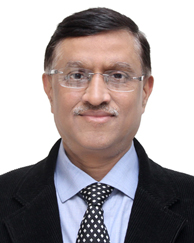 Dr. Dnyaneshwar Mulay was the Consul General of India, in New York in 2013-2016. He was appointed by the President of India on National Human Rights Commission in April 2019. He chairs “Pravasi Bharatiya and Scientific Sampark“ (PRABHASS), an inter-ministerial working group to effectively engage with the global science and technology community for enriching the Indian eco-system by networking with Indian Researchers and Institutions. This initiative Is the first of its kind, to tap expertise of overseas Indians, in line with PM Modi’s vision of Atma-nirbhar Bharat.
Dr. Mulay is a multi-faceted personality. He has a distinguished academic career: Jagannath Shankarsheth Scholarship (for Sanskrit) in 1974, Dhananjay Keer award (1-st rank in BA, Kolhapur University), 1st rank in Maharashtra Public Service Commission in 1982, before joining the Indian Foreign Service in 1983, Ph.D. (Honoris Causa) from D. Y. University 2017. He is a very distinguished career diplomat. He has written over 15 books, essays, poems, novels, in Marathi, Hindi, and English, which have been translated in Hindi, Kannada, Urdu, Arabic, and Dhuvehi. His magnum opus is his autobiography in Marathi, “Maati, Pankh, and Aakaash”.
India and US are the two largest democracies and among the five largest economies of the world. Together they can build relationship that could shape the world in the coming decades if not centuries. The relationship has evolved into a ‘global strategic partnership’ and is considered ‘natural’ by both countries and their citizens. It is high time that the relationship is focused on thoughtful futuristic cooperation. India desires to become a leading power. Along with its intellectual and philosophical heritage of the past embedded with strong scientific accomplishments India has engaged the USA in strategic consultation on civil, nuclear and defence cooperation, counter terrorism and internal security, energy and climate change, space S&T besides other areas like health services and education. The people to people exchanges are also enormous in its potential. The well designed outcome oriented engagements in the areas of artificial intelligence to bio-technology and from nanotechnology to space could make this partnership globally useful and bilaterally meaningful. It is necessary that foundation for such thoughtful and futuristic cooperation is laid now.